How to Make Your Roofer Website SEO Friendly (Local SEO Guide for NJ, CT, NH, MD & MA)

SEO Specialist
When a nor’easter tears shingles off a roof in Worcester, or a summer storm drops a tree limb on a house in Toms River, homeowners don’t flip through a phone book. They grab their phone and search “roofer near me”, “emergency roof repair” or “roof replacement in [their town]”. Whichever roofing companies show up in the map pack and the first few results get the calls. Everyone else waits for referrals.
This guide shows you how to make your roofer website SEO friendly, with a special focus on local search in New Jersey, Connecticut, New Hampshire, Maryland and Massachusetts. Every step is practical: you can do most of it yourself, or hand this list to your web developer.
Key takeaways
- Your Google Business Profile and reviews decide whether you appear in the map pack, so set them up first.
- Build one page per service and one genuinely useful page per city you serve, not copy-paste “doorway” pages.
- Show your state license or registration. In New Jersey, Connecticut, Massachusetts and Maryland, homeowners can look you up, and it builds trust.
- Write about local roofing problems: ice dams in New England, coastal wind in New Jersey and Maryland, and historic-district rules.
- A fast, mobile-friendly site with click-to-call, RoofingContractor schema and real project photos turns visitors into booked inspections.
Why local SEO matters more for roofers than almost any other trade
Roofing is a high-ticket, high-urgency, local service. A homeowner with a leak wants someone who can be on the roof this week, inside their town, with a license they can check. Google knows this, so for searches like “roof repair” it shows the local pack: a map with three businesses, pulled from Google Business Profiles, ranked by relevance, distance and prominence.
Free, with a written report.
Get my free auditThe Northeast and Mid-Atlantic add another twist: demand spikes with the weather. Nor’easters, heavy snow and ice dams hit New England every winter, and the Atlantic hurricane season (June 1 to November 30) brings wind and rain to the Jersey Shore and the Chesapeake Bay. After every storm, searches surge and so do storm chasers, the out-of-state crews that knock on doors. A well-optimized local website is how an established, licensed roofer wins those searches instead.
1. Set up and optimize your Google Business Profile
Your website and your Google Business Profile (GBP) work as a team. The profile wins the map pack; the website backs it up with detail and converts the click. Get these right:
- Primary category: “Roofing contractor”. Add secondary categories only if they’re real services, such as “Gutter cleaning service” or “Siding contractor”.
- Service areas: list the towns and counties you actually serve, for example Bergen County and Morris County in NJ, or Hillsborough County in NH. If customers don’t visit your office, hide the street address and keep the service area.
- Services: add each one (roof replacement, roof repair, storm damage repair, ice dam removal, flat roofing) with a short description.
- Photos: upload real job photos every month: before and after, crews on site, your branded trucks.
- Website link: point it to your home page, or to a matching city page if you have one branch per area.
- Posts and Q&A: post seasonal tips (“Preparing your roof for winter in Concord, NH”) and answer common questions.

2. Give every roofing service its own page
A single “Services” page listing everything you do can’t rank for all of them. Google ranks pages, not websites, so each service needs a page that fully answers one type of search. A simple keyword map looks like this:
| Page | Main keyword | What the page must cover |
|---|---|---|
| Roof replacement | roof replacement [city] | Materials, timeline, permits, warranty, financing, photos |
| Roof repair | roof repair [city] | Leaks, missing shingles, flashing, response time |
| Storm damage repair | storm damage roof repair | Emergency tarping, insurance claim help, photo documentation |
| Ice dam removal | ice dam removal [city] | Safe steaming, prevention, attic ventilation and insulation |
| Flat and commercial roofing | flat roof repair, commercial roofing | EPDM, TPO, modified bitumen, maintenance plans |
| Gutters and skylights | gutter installation [city] | Seamless gutters, guards, skylight repair and replacement |
Each service page should include a clear H1 with the service and area (“Roof Replacement in Northern New Jersey”), the materials you install, your process step by step, real photos, reviews that mention that service, an FAQ, and a call-to-action above the fold: “Call now” and “Book a free inspection”.
3. Build location pages that are genuinely local
If you serve 30 towns, it’s tempting to clone one page 30 times and swap the city name. Google treats that as thin, “doorway” content and it rarely ranks. Instead, create pages for your most important towns and make each one unique:
- Projects you completed there, with photos and the neighborhood name.
- Reviews from customers in that town.
- Local housing styles: colonials in Connecticut, Cape Cods in Massachusetts, rowhouses in Baltimore, shore homes in Ocean County.
- Local rules: the town’s permit process, and any historic-district approval needed.
- The weather problems that town actually faces, and how you solve them.
Start with the 5 to 10 towns that bring you the most revenue, for example Cherry Hill and Toms River (NJ), Stamford and New Haven (CT), Nashua and Manchester (NH), Annapolis and Frederick (MD), or Worcester and Quincy (MA). Add more as you complete jobs there.
4. Show your state license or registration on every page
Homeowners in this region are warned, again and again, about unlicensed contractors after storms. Putting your registration number in your footer and on your contact page builds instant trust, supports your Google Business Profile and, in some states, is part of the advertising rules. Here’s a quick overview for residential roofing:
| State | What residential roofers typically need | Who issues it |
|---|---|---|
| New Jersey | Home Improvement Contractor (HIC) registration; the number must appear on contracts and advertisements | NJ Division of Consumer Affairs |
| Connecticut | Home Improvement Contractor registration; homeowners can verify it on eLicense | CT Department of Consumer Protection |
| Massachusetts | Home Improvement Contractor registration, plus a Construction Supervisor License (a roof covering specialty license is available) | Office of Consumer Affairs and Business Regulation; Board of Building Regulations and Standards |
| Maryland | Maryland Home Improvement Commission (MHIC) license | Maryland Home Improvement Commission |
| New Hampshire | No statewide roofing license; register the business with the Secretary of State and check local permit rules | NH Secretary of State; individual towns |
Rules change and towns add their own requirements, so always confirm the current rules with the state agency before you publish your license details.
5. Write content about local roofing problems, state by state
Generic articles like “10 signs you need a new roof” are everywhere. Content that speaks to your region’s weather and housing is what earns local rankings, links from local sites and trust from homeowners. Here are ideas for each state.
New Jersey: coastal wind, storms and dense suburbs
Shore towns in Ocean, Monmouth and Atlantic counties face strong coastal wind and salt air, and Superstorm Sandy in 2012 is still a reference point for many homeowners. Write about wind-rated shingles and proper nailing, hurricane-season roof checks, and what to do after a storm, including how to spot a storm chaser. In North Jersey, cover roof replacement on older homes and what your town’s permit process looks like.
Connecticut: nor’easters, older homes and falling trees
Connecticut has many older colonials and capes and plenty of mature trees, so storm and tree damage are common topics. Explain when a repair is enough and when a full replacement makes sense, how to handle an insurance claim after a nor’easter, and why homeowners should check a contractor’s registration on the state’s eLicense lookup. The Department of Consumer Protection regularly warns about scammers posing as roofing companies, so your honesty is a selling point.
New Hampshire: heavy snow and ice dams
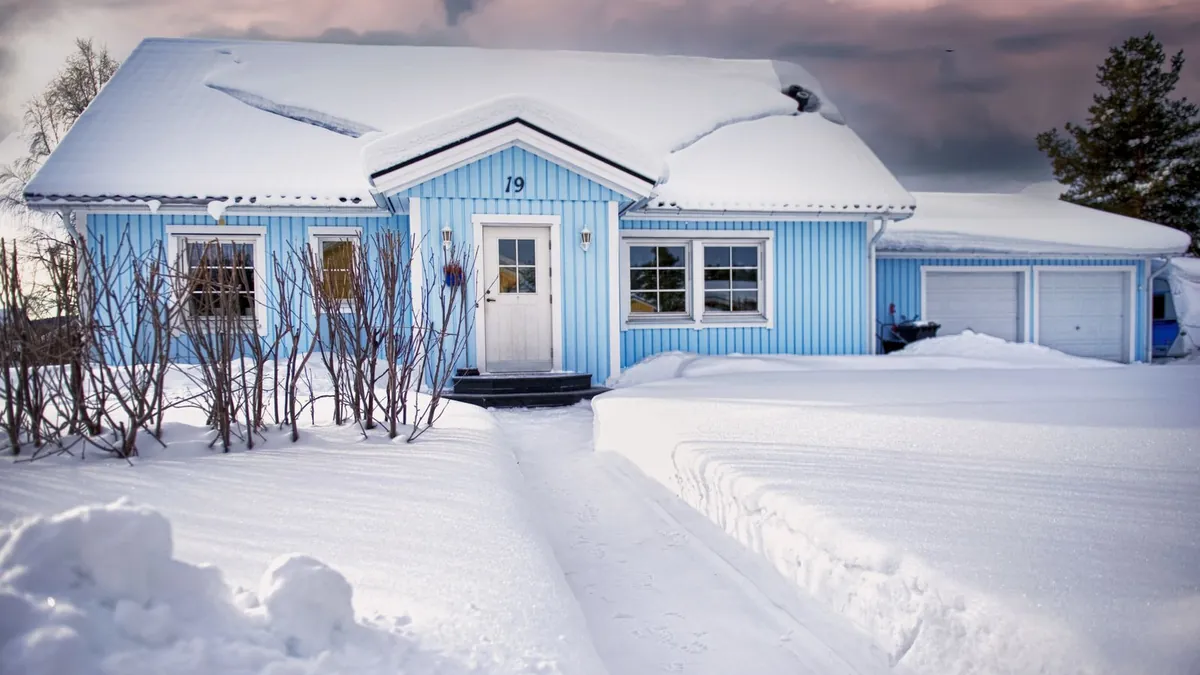
Long winters and heavy snow make ice dams and snow load the top concerns from Nashua to the Lakes Region. Write about ice dam prevention (attic insulation, ventilation, ice-and-water shield), safe snow removal, and when metal roofing makes sense for shedding snow. Because New Hampshire has no statewide roofing license, homeowners rely on reviews, insurance certificates and manufacturer certifications even more, so put those front and center.
Maryland: humidity, summer storms and historic districts
Maryland roofs deal with hot, humid summers, strong thunderstorms and wind off the Chesapeake Bay. Content ideas: preventing algae streaks and moisture damage, roof ventilation for humid attics, and storm-season checklists. In Annapolis, Frederick and other towns with historic districts, changing roofing materials can need approval, so a clear guide to that process attracts exactly the homeowners who need an experienced, MHIC-licensed roofer.
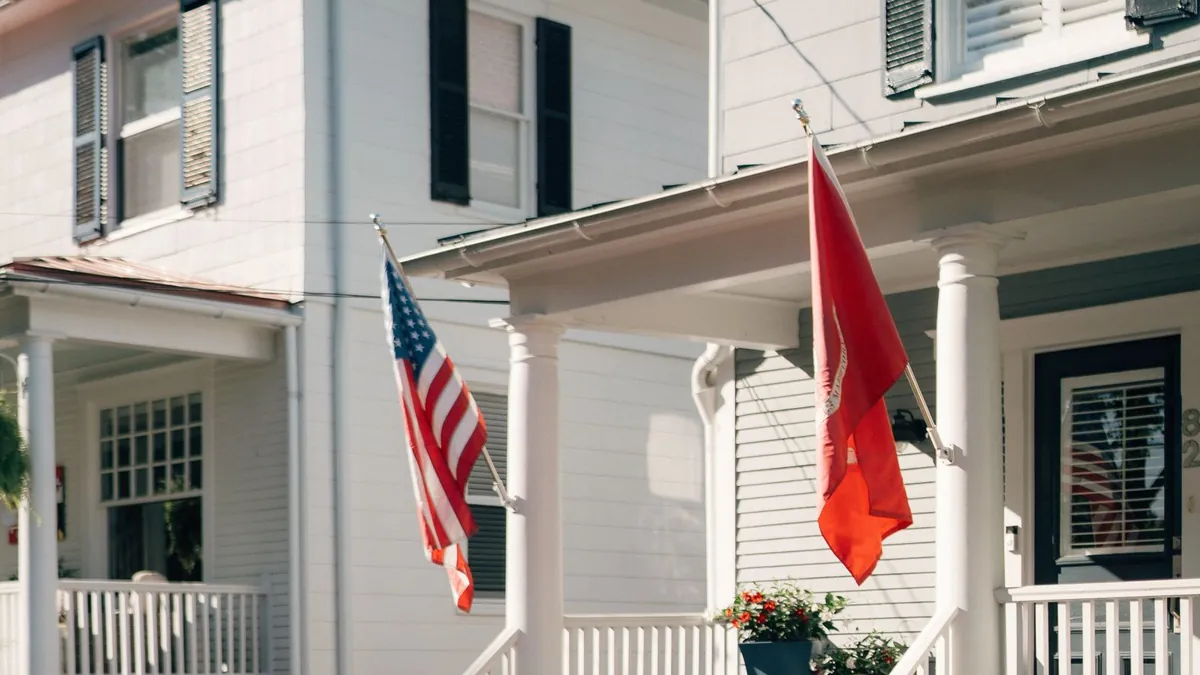
Massachusetts: ice dams, permits and coastal homes
Massachusetts homeowners search for ice dam removal every winter, and coastal homes on the South Shore and Cape Cod face wind and salt exposure. Write about ice dam removal versus prevention, what a Construction Supervisor License means for a homeowner, how roofing permits work in towns like Worcester or Quincy, and how to choose shingles for coastal homes. Mention your HIC registration and CSL clearly.
6. Keep your name, address and phone consistent everywhere
Google cross-checks your business details across the web. Use exactly the same business name, address (or service area) and phone number (NAP) on your website, your Google Business Profile and every directory. Priority listings for roofers include:
- Bing Places and Apple Business Connect (Apple Maps)
- Better Business Bureau (BBB), Yelp, Nextdoor and Facebook
- Angi, HomeAdvisor, Houzz and Thumbtack
- Manufacturer contractor locators, if you’re certified (for example GAF, Owens Corning or CertainTeed)
- Your local chamber of commerce and state roofing or contractor associations
If you use call tracking, use a tracking script that swaps the number only for website visitors and keep your main number in the HTML, so Google always sees one consistent phone number.
7. Get more Google reviews, the right way
Reviews are one of the strongest local ranking signals, and the first thing homeowners read. Build a simple habit: ask every happy customer on the day you finish the job, by text, with a direct link to your review form. Reply to every review, good or bad, and mention the service and town naturally (“Thanks for trusting us with your roof replacement in Frederick!”).
Stay inside the rules: don’t offer discounts or gifts for reviews, and don’t ask only your happiest customers while filtering others out. Google’s policies prohibit both, and the U.S. Federal Trade Commission’s rule on fake reviews and testimonials (finalized in 2024) allows penalties for fake or bought reviews.
8. Make the website fast, mobile-friendly and easy to call from
Many roofing leads come from a phone, sometimes from someone standing in their driveway looking at a leak. Your site has to load fast and make contacting you effortless:
- Speed: aim for a mobile page that loads in under 2.5 seconds (Google’s “good” threshold for Largest Contentful Paint). Compress project photos and convert them to WebP.
- Click-to-call: a sticky “Call now” button on mobile, and your phone number as a clickable tel: link in the header.
- Short forms: name, phone, town and “what’s going on with your roof”. Every extra field loses leads.
- HTTPS and a clean structure: a secure site, one H1 per page, descriptive titles like “Roof Repair in Nashua, NH | [Your Company]”, and an XML sitemap submitted to Google Search Console.
Not sure how your site performs? Run it through our free SEO audit or the Core Web Vitals test to see exactly what to fix first.
9. Add RoofingContractor schema markup
Schema markup tells Google, and AI assistants like ChatGPT and Gemini, exactly who you are, what you do and where. Schema.org has a dedicated RoofingContractor type. Add it to your home page and contact page with your name, phone, service area and reviews. A simplified example:
{
  "@context": "https://schema.org",
  "@type": "RoofingContractor",
  "name": "Your Roofing Company",
  "url": "https://www.yourroofingcompany.com/",
  "telephone": "+1-555-555-0100",
  "areaServed": ["Bergen County, NJ", "Passaic County, NJ", "Morris County, NJ"],
  "address": { "@type": "PostalAddress", "addressLocality": "Paramus", "addressRegion": "NJ", "addressCountry": "US" },
  "sameAs": ["https://www.facebook.com/yourpage", "https://www.bbb.org/your-listing"]
}
Use real details only, and test the markup with Google’s Rich Results Test. Our free schema checker also shows what’s missing.
10. Use real project photos with local context
Before-and-after photos are your best sales tool and good SEO content. Give each image a descriptive file name and alt text (“architectural-shingle-roof-replacement-quincy-ma.webp”), add a short caption with the town and the problem you solved, and group them in a project gallery or case study. Adding GPS data to photos isn’t a proven ranking factor; the visible text around the photo is what helps.
11. Prepare storm-response and seasonal pages in advance
Searches spike the morning after a storm, and pages take time to rank. Publish these before the season starts: an emergency roof repair and tarping page, a storm damage insurance claim guide, a winter roof and ice dam page for New England, and a hurricane-season roof checklist for the Jersey Shore and Maryland. Update and reshare them on your Google Business Profile when storms are forecast.
12. Earn local links and track what brings in jobs
Links from local, relevant websites tell Google you’re a real part of the community. Sponsor a youth sports team, join your chamber of commerce, donate a roof repair to a local nonprofit, or share expert winter-roof tips with local news sites. Skip cheap link packages, which can do more harm than good.
Then measure, because knowing how to make your roofer website SEO friendly is only half the job; the other half is seeing what works. Connect Google Search Console and Google Analytics 4, track calls and form submissions as conversions, and review every month which pages and towns bring in inspections. Double down on what works.
How to make your roofer website SEO friendly: quick checklist
| Task | Why it matters |
|---|---|
| Google Business Profile complete, “Roofing contractor” category | Wins the map pack |
| One page per service | Ranks for each service search |
| Unique pages for your top 5 to 10 towns | Ranks for “[service] in [town]” |
| License or registration number on the site | Trust, and advertising rules in some states |
| Consistent NAP on directories | Confirms your business to Google |
| Steady flow of genuine reviews | Ranking signal and conversion booster |
| Fast mobile site with click-to-call | More calls from the same traffic |
| RoofingContractor schema | Clear signals for Google and AI search |
| Real project photos with captions | Proof of work, image search traffic |
| Storm and seasonal pages published early | Captures post-storm demand |
Frequently asked questions
How long does SEO take for a roofing company?
Google Business Profile improvements and new reviews can move map rankings within a few weeks. Ranking new service and city pages usually takes three to six months, depending on how competitive your area is.
Should I create a separate page for every town I serve?
Only for towns where you can write genuinely unique content, such as local projects, reviews and local rules. Start with your 5 to 10 most valuable towns rather than dozens of near-identical pages.
Do I need to show my license number on my roofing website?
It’s strongly recommended everywhere, and in New Jersey your Home Improvement Contractor registration number must appear on advertisements. Check your state agency’s current advertising rules for Connecticut, Massachusetts and Maryland.
What’s the most important local SEO factor for roofers?
A complete Google Business Profile with a steady stream of genuine reviews, backed by a fast website with dedicated service and location pages.
Is Google Local Services Ads the same as SEO?
No. Local Services Ads are paid, pay-per-lead ads that appear above the map, with Google’s screening badge. They work well alongside SEO, but SEO keeps bringing in calls without paying for each lead.
Want more roofing leads from Google?
I help roofing companies in New Jersey, Connecticut, New Hampshire, Maryland and Massachusetts rank in the map pack and turn their websites into lead machines. If you’d rather not work out how to make your roofer website SEO friendly on your own, start with a free audit of your roofing website and I’ll show you exactly what to fix first.